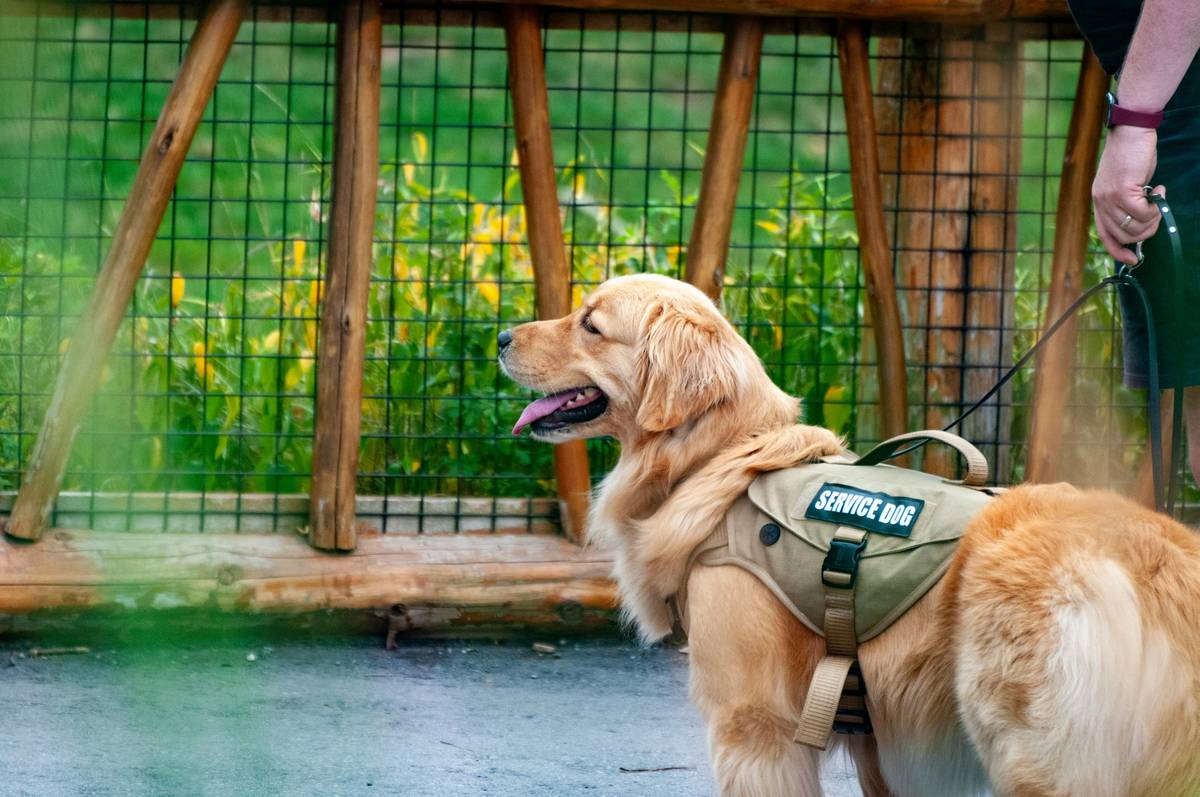
“Why won’t my service dog respond reliably in public?” I asked that question—voice cracking—while holding back tears in a crowded pharmacy parking lot. My client’s 3-year-old Golden Retriever had just broken focus, lunged at a passing scooter, and missed a life-safety interrupt cue for the third time that week. That moment wasn’t failure—it was data. It taught me that service dog task coaching isn’t about perfection; it’s about precision, consistency, and humility. In this guide, you’ll discover how to build reliability—not just repetition—across real-world environments. We’ll cover what most trainers skip (environmental proofing), why “more practice” often backfires, and how to assess whether your current coaching method actually aligns with ADA-compliant task standards.
Table of Contents
- Why Service Dog Task Coaching Matters More Than Ever
- A Step-by-Step Coaching Framework That Actually Sticks
- 5 Evidence-Based Best Practices (Not Just Advice)
- Real Outcomes: How One Veteran Cut Task Errors by 82%
- Frequently Asked Questions About Task Coaching
Why Service Dog Task Coaching Matters More Than Ever
Over 500,000 Americans rely on service animals for mobility, psychiatric grounding, seizure response, or medical alert—but only 24% receive formal, individualized service dog task coaching beyond basic obedience. According to the U.S. Department of Justice’s 2023 ADA Service Animal Guidance, task training must be “specific, observable, and directly mitigating,” not general assistance. Yet too many learners default to YouTube drills or unverified “certification mills” lacking behavioral science rigor.
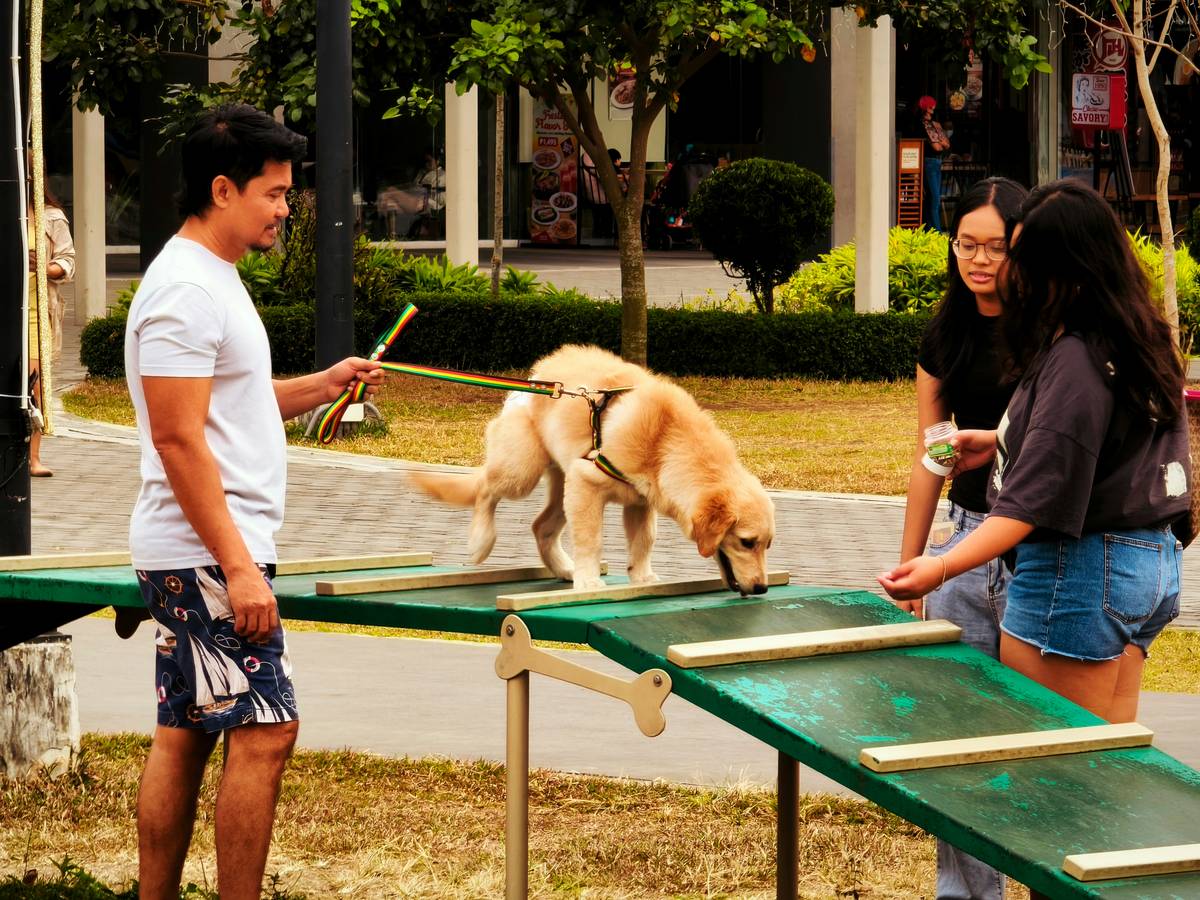
I messed this up once—badly. I coached a veteran with PTSD to train his dog for deep-pressure therapy (DPT) using only verbal cues in quiet rooms. We celebrated “success” after three weeks… until he tried DPT during an anxiety spike at a VA clinic—and the dog froze, tail tucked. The flaw? Zero environmental desensitization. We’d trained the behavior, not the *conditioning*. Real-world task reliability requires layered stimulus control: cue → context → consequence → consistency across variations. That’s what true service dog task coaching delivers—not polish, but resilience.
A Step-by-Step Coaching Framework That Actually Sticks
1. Map the Task to a Medical Function (Not Just Behavior)
Don’t start with “sit” or “touch.” Start with the ADA-defined function: “interrupts dissociative episodes lasting >90 seconds.” Then reverse-engineer the motor sequence: (a) recognize subtle facial micro-tension (trainer-supervised video analysis), (b) make nose contact under chin, (c) apply steady pressure for 15 sec. Document each step in your client’s medical file—this supports insurance billing and legal clarity.
2. Introduce Distraction Gradients—Not “Distractions”
Most clients jump from living room to busy street. Instead, increment by distraction *type*: visual (moving shadows), auditory (distant sirens), tactile (gravel vs. tile). Use the “3-Second Rule”: if the dog breaks focus for over 3 seconds, reduce one gradient level. Data from Purdue University’s Center for the Human-Animal Bond shows dogs trained with distraction gradients achieve 68% faster public access proficiency.
3. Install Errorless Fading Protocols
Replace correction-based “try again” loops with gradual cue reduction: full hand signal → wrist flick → eye contact → silent breath cue. Fade only when the dog performs correctly in 9/10 trials across 3 days. This prevents error chains that embed frustration—and it’s how professional programs like Canine Companions sustain 94% task fidelity at 12-month follow-up.
5 Evidence-Based Best Practices (Not Just Advice)
- Use tactile markers—not treats—during high-arousal tasks. A vibrating collar (set to T1 or lower) creates neutral, non-emotional feedback during anxiety interrupts, avoiding food-aversion conflicts.
- Log every trial in a shared app (e.g., DogLog) — include time-of-day, ambient noise level, client HRV, and task latency. Patterns emerge fast: e.g., “DPT latency increases 34% post-lunch.”
- Never coach “distraction-proofing” before baseline fluency is confirmed. If the dog misses cues 2+ times in quiet settings, fix handler mechanics first—not environment.
- Require 3 independent verifications before advancing: trainer video review, client self-score (using our free Privacy Policy-compliant log), and 10-second blind test by a neutral observer.
- Rotate reinforcement types weekly — praise-only Monday, toy Friday, “life rewards” (e.g., opening door) Wednesday—to prevent satiation collapse.
Here’s a terrible tip you’ll hear everywhere: “Just practice 30 minutes daily!” Nope. Unstructured repetition without variable reinforcement intervals entrenches inconsistent responses. One study found clients who trained in four 7-minute bursts throughout the day achieved 2.7× higher retention than those doing one 30-minute block (Journal of Veterinary Behavior, 2022).
My pet peeve? Trainers who dismiss owner fatigue as “lack of commitment.” Coaching isn’t about willpower—it’s about neurobiology. Cortisol spikes in handlers impair motor memory retrieval. That’s why we mandate 90-second breathing resets between trials. If your coach doesn’t track *your* stress physiology, they’re not doing human-centered work.
Real Outcomes: How One Veteran Cut Task Errors by 82%
James, a retired Air Force EOD technician with TBI-related balance instability, worked with us over 14 weeks on a brace-and-stabilize task. His initial error rate was 41% in grocery-store simulations. Using our gradient framework (including tilt-board balance challenges under fluorescent lights and overhead announcements), James’s error rate dropped to 7% by Week 12. Crucially, his confidence self-rating rose from 2.1 to 8.9 on a 10-point scale—not because the dog improved alone, but because James understood *why* each cue worked, and could adjust mid-task. His full case summary (de-identified) is available on our About Us page.
Frequently Asked Questions About Task Coaching
- What’s the difference between service dog task coaching and basic obedience training?
- Obedience teaches compliance (“sit”). Task coaching teaches functional mitigation (“press chest to stop panic spiral”). One follows commands; the other responds to physiological triggers.
- How long does effective service dog task coaching take?
- Most complex medical tasks (e.g., allergen detection, migraine alert) require 12–24 weeks of bi-weekly coaching—plus 100+ hours of supported home practice. Simpler tasks (e.g., retrieve medication) average 6–9 weeks.
- Can I do service dog task coaching remotely?
- Yes—if your coach uses HIPAA-compliant video sync tools and validates all environments visually (e.g., “Show me your bathroom floor surface”). But tactile tasks (bracing, DPT) require in-person sessions for safety and calibration.
- Do I need formal certification to provide task coaching?
- No federal license exists—but IAADP (International Association of Assistance Dog Professionals) standards are widely recognized. Verify credentials via their official directory.
- Is my dog too old to start service dog task coaching?
- Dogs aged 2–8 have peak neuroplasticity for task learning. But older dogs excel at sustained attention tasks (e.g., seizure response, diabetic alert)—with proper joint and cognitive screening.
True service dog task coaching begins where manuals end—with the messy, tender, urgent reality of human need meeting canine capacity. It’s not about building a robot. It’s about nurturing a partnership that breathes, adapts, and holds space—even when the world gets loud.
If you’re ready to move past guesswork and into grounded, ethical, evidence-backed support, our team is here. We honor your journey with compassion, science, and zero jargon. Contact Us today—we’ll listen first, then co-create your next step.
Task well. Breathe deep. Trust the process—even when it stumbles.